
Asthma is a respiratory condition marked by inflammation and narrowing of the airways. It is characterized by reversible episodes of difficulty breathing, but can progress into a chronic condition.
Asthma typically appears in boys in infancy, and in girls around puberty. For females it can also occur at other big hormonal shifts such as menopause. Curiously, asthma is known to abate during pregnancy. It is not uncommon for childhood asthma to disappear in adulthood.
The primary predisposing factor to asthma is exposure to allergens, whether food or environmental. Dairy and gluten are some of the more common food based allergens. The body’s first line of defense in the face of an allergen is somewhat generalized and exaggerated. This protective response results in broncho-constriction and excessive mucous production which can lead to wheezing and crackling sounds coming from the lungs accompanied by chest tightness and difficulty breathing.
Other factors are heredity; exercise or cold induced, (superimposed on an allergic profile); viral or bacterial bronchial infections; tobacco use; and exposure to environmental toxins or pollutants. Gastro-esophageal reflux disorder, (GERD), often times asymptomatic, is also associated with asthma and is characterized by a nocturnal cough.
Asthma can be exacerbated by stress. The smooth muscle lining the airways is under the influence of the sympathetic, or fight or flight phase of the autonomic nervous system. Under stress, as well as in times of grief, the airways have a tendency to contract.
The key mechanisms involved in asthma include:
- Airway Inflammation: The bronchial tubes become inflamed and swollen, leading to increased mucus production.
- Bronchial Hyperresponsiveness: Broncho-constriction is a normal protective mechanism that occurs when we are exposed to harmful toxins. With asthma, the airways become overly sensitive to triggers, causing excessive contraction.
- Airway Remodeling: Long-term inflammation can lead to structural changes in the airways. The walls of the airways become thickened with scarring. The body attempts to repair the lining of the airways by laying down cells that specialize in producing secretions, setting-up a vicious cycle.

Traditional Medical Treatments
Conventional medical approaches focus on two main categories:
Quick-Relief Medications (Rescue Inhalers)
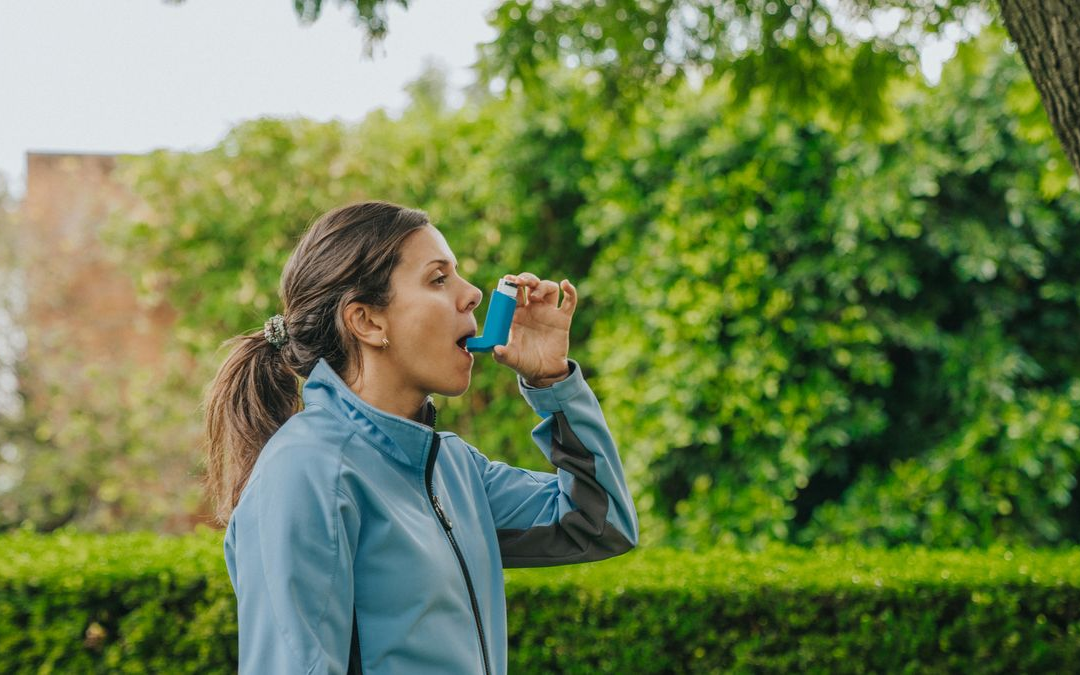
Asthma attacks can be life threatening. Rescue inhalers, (like Albuterol), can be a life saving measure for asthma sufferers. Curiously, only about 10% of inhalers make their way to the lungs. Please consult with your overseeing medical professional to be sure you are using your inhaler properly. Oral corticosteroids are also prescribed for severe attacks.
Long-Term Control Medication
- Inhaled corticosteroids
- Long-acting beta-agonists (LABAs)
- Leukotriene modifiers
- Combination inhalers
Some asthma sufferers may not tolerate the side effects of asthma medications very well. Some of the common side effects are shakiness, nervousness, rapid heart rate or palpitations. Other side effects can be throat and nose irritation as well as muscle aches. The challenge for asthma sufferers is to balance the undesirable side effects of medicines with the damaging long term effects of chronic broncho-constriction and excess mucous production on the fragile lung tissue.
Alternative Treatment Approaches
Complementary therapies can work alongside traditional treatments to manage asthma symptoms. Few studies on the direct effects of acupuncture and qigong on asthma are conclusive in terms of curing asthma. It can at least be concluded that these practices do little harm. It can also be agreed that these practices enhance overall health by reducing stress, improving sleep and digestion, and reducing inflammation.
One study cautiously concluded that qi gong can help increase respiratory endurance. This may be important given that exercise is important for asthma sufferers, but must be carefully paced and monitored, because exercise can induce an asthma attack.
Other natural approaches may also be useful in managing asthma symptoms. The Buteyko breathing method, diaphragmatic breathing, and pranayama yogic breathing exercises are among some recommended practices to improve breathing. Self administered respiratory therapy in the form of tapping or percussion on the chest can mechanically help attenuate the consequences of bronco-constriction and excess mucous production.
Massage and bodywork can also be supportive for the asthma sufferer. Constrained breathing can result in tight neck muscles, shoulder restriction and stiff ribs. Freeing of the cage or container so to speak, can permit greater expansion of the rib cage and freer movement of the diaphragm which translates into better mobility of the lungs nestled between these structures. General relaxation can aid in relaxing contracted airways.
These forms of bodywork and self care practices can at the very least support a challenged respiratory system as well as other aspects of overall health and well-being.
Prevention and lifestyle modifications
Because allergies are one of the primary sources of asthma it is important to identify the irritants and avoid them, or build tolerance to them. Numerous people seek-out acupuncture to alleviate seasonal allergies. Regular cleaning and dust control are important. Air purification systems and humidification can be helpful. However, caution must be exercised with humidifiers since mold is a common trigger for asthma.
Regular exercise can be beneficial with proper precautions. Stress management is encouraged and is important for our overall mental and physical health.
Regular medical monitoring and medication adjustment is important for asthma sufferers. This blog is not intended to replace medical care. Please consult with your physician if you suspect you have asthma or an exacerbation of asthma symptoms.
Sources:
https://www.mayoclinic.org/diseases-conditions/asthma/symptoms-causes/syc-20369653
https://pubmed.ncbi.nlm.nih.gov/37480272/ (Asthma and qi gong)
https://pmc.ncbi.nlm.nih.gov/articles/PMC6946403/ (asthma and acupuncture)
https://www.amazon.com/Breath-New-Science-Lost-Art/dp/0735213615
https://pmc.ncbi.nlm.nih.gov/articles/PMC6513443/ (Buteyko breathing method)
https://pmc.ncbi.nlm.nih.gov/articles/PMC7550896/ Nutrition and asthma
https://pmc.ncbi.nlm.nih.gov/articles/PMC4311561/ Elimination diets and asthma