
Why would anybody come for acupuncture and NOT have needles stuck in them??? Hmmmmmm.
Last month’s blog describes why anyone in their right mind would willingly be needled to feel better. This month we will look at the various reasons someone would come for acupuncture, but not be needled. Sounds like an oxymoron, doesn’t it?
As mentioned in last month’s blog acupuncture is just one branch of Chinese Medicine. For obvious reasons, most people associate acupuncture with needles. The word for acupuncture, zhen jiu, actually translates to ‘needle moxa’. Already embedded in the pinyin word itself is the notion that the application of heat is wedded to the insertion of needles.
Four Branches
Acupuncture is just one method used to activate the flow of Qi/vital life force, for the improvement of health and prevention of disease. Other means your acupuncturist, who is trained in the principles of Chinese Medicine, may use are: massage; exercise and meditation; and nutritional and herbal remedies.
Four Methods of Diagnosis
There are four methods of diagnosis in Chinese Medicine that allow your acupuncturist to collect information on the condition of your Qi reflected in your meridians and organs, and then choose the appropriate treatment strategies. The following is how your acupuncturist gathers important information, whether s/he will be inserting needles or not.
Looking/Observation: your acupuncturist will look at the color and luster of your complexion. Each meridian pair and organ system has a particular color associated with it. Your acupuncturist may also ask to see your tongue.
Listening/Hearing: your acupuncturist will ask you questions. S/he listens carefully to your answers, and to your tone of voice. Certain voice qualities are associated with particular meridians and organs.
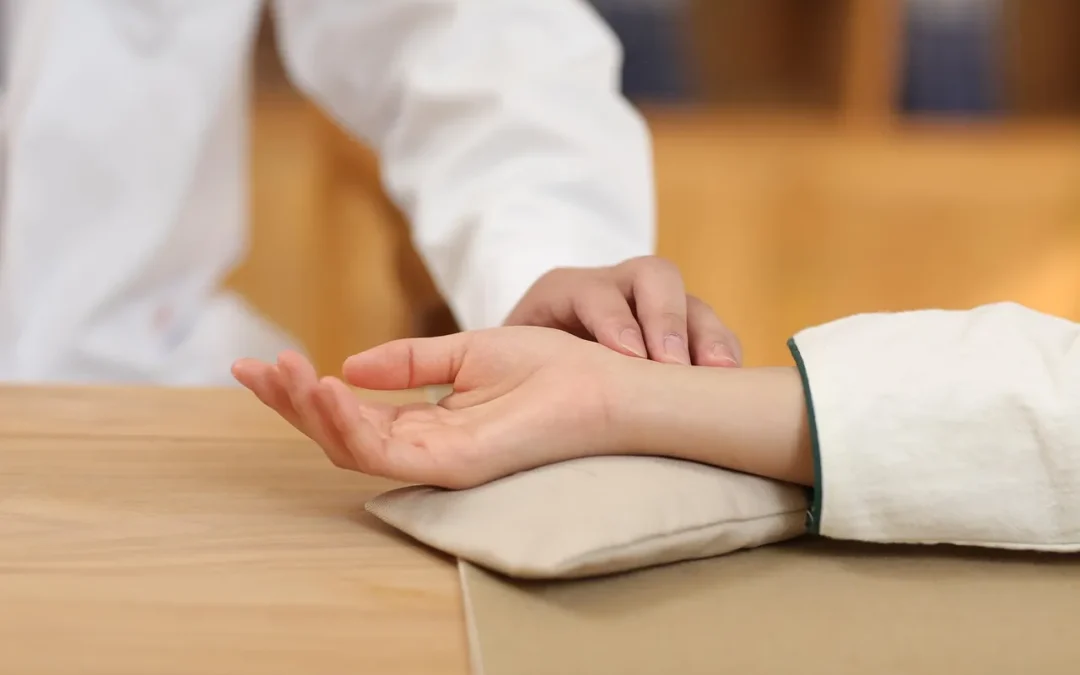
Touching: your acupuncturist will feel your pulses, and s/he may palpate your abdomen and feel along the trajectory of your meridians, and your muscles and bones. S/he will note areas of tension, pain, and even the remarkable absence of tension or resilience in your tissues, organs, and meridians.
Smelling: your acupuncturist may note any overarching qualities of smell present such as a sweetish smell, or oily, or burnt odor. Each of the meridian pairs and organ systems are associated with particular odors. Scent can be an important clue as to which meridians and organ systems need to be treated for your particular condition.
Why would someone come for acupuncture and NOT be needled?
Some people are just plain scared of needles.
Others are just highly sensitive to any kind of treatment. These may be the same folks who do not tolerate medication very well. Often times, this is why people come for acupuncture in the first place. Although needling is quite subtle and generally painless, for some it can be too stimulating. An acupuncture treatment without needles, engaging the principles of Chinese Medicine is an excellent way to adjust the ‘dosage’ of the treatment for sensitive folks.
Lastly, some physicians advise against receiving acupuncture shortly after surgery. If you have recently had surgery and your physician advises you against receiving acupuncture/needling during the post-operative period, acupuncture without needles can be an acceptable and beneficial way to support your recovery from surgery.
So, what does an acupuncture treatment without needles look like?
The assessment is the same. The good news is, many of the strategies your acupuncturist uses, because they do not employ needling which requires special licensure, can be taught to the patient or their family members to use at home.
Heat/Moxa
Your acupuncturist may apply indirect heat in the form of a moxa pole, along meridians or painful or inflamed areas. The pole looks like a hard cigar. It is lit until it glows like an ember. Your acupuncturist will either hold it or move it over the desired area, (without ever touching the skin!), until the skin becomes pinkish and warm. Indirect moxa is surprisingly effective for pain, inflammation, and symptoms of neuropathy.


Your acupuncturist may apply direct moxibustion on acupuncture points, far from a surgical site for example, to stimulate Qi and blood flow from a distance, often providing immediate relief of pain and inflammation.
Your acupuncturist will mark the points to be treated with a protective salve. S/he will roll loose moxa, (dried mugwort) into a thread the size of a small grain of rice. S/he will place it on the point, light it from the top with a fine incense stick, then allow it to burn down, fleetingly, to the protected skin. The sudden and brief warmth can feel quite pleasant. The stimulation may be felt at the point and distant from the point along the meridian. Results are a decrease in pain and inflammation and an increase in mobility in troubled joints.
There are stick-on forms of direct moxa, which are extremely convenient and easy to use if you don’t have the patience to practice rolling the delicate threads.

Magnets
9000 gauss treatment strength magnets can be used in the place of needles. Your acupuncturist will do his/her assessment and choose the most effective points to treat for your condition, as usual. However, instead of inserting needles into the points, s/he will tape tiny magnets onto your skin. S/he will choose which pole, positive or negative, to place on the skin based on whether s/he intends to tonify or disperse a point. Sometimes s/he will attach ion pumping cords made of copper wire to the magnets to create an even stronger polarity between two points. This enhances the activation of your Qi. Magnets will be left in place for 15-30 minutes to allow for the optimum change in Qi flow. S/he will confirm changes by reassessing your pulses, abdominal tension, as well as tension in other parts of your body that were present before treatment.
Your acupuncturist may send you home with milder 800 gauss magnets taped onto certain therapeutic points to sustain the effects of the treatment. These magnets stay in place for up to seven days.
Press balls and press seeds
Your acupuncturist may choose to stimulate chosen points with press balls. Press balls may be stainless steel or gold plated. They are like tiny BBs on a clear plaster that is attached onto the skin. These balls can remain in place for up to seven days. Your acupuncturist may encourage you to massage the points occasionally, to enhance their effect.
Press seeds are radish seeds attached to a plaster. They are used exactly like press balls.
Cupping and Gua Sha
Cupping and Gua Sha are techniques applied to the skin. Both help move blood to reduce pain and increase mobility. Both have a therapeutic effect on the musculoskeletal level, as well as effecting organ function and improving mood. Both will leave the skin marked for up to three to four days if significant ‘Blood Stagnation’ is present.
Cupping involves suction cups applied to the skin. The cups may be hard plastic, soft silicone, or glass. They are applied with a pump or in the case of fire cupping the cup is briefly heated to create the vacuum. The cups may stay in one place or your acupuncturist may slide the cups over a broad area.

Gua Sha is a friction technique. Gua Sha means scraping sand. The most common scraping tool is a porcelain soup spoon like what would be used in a Chinese restaurant. There are numerous other Gua Sha tools on the market that come in a variety of shapes and materials.
Massage
Your acupuncturist may be trained in Tui Na, a Chinese massage applied to the meridians to activate Qi. Shiatsu is a Japanese style of massage to the meridians that uses thumb pressure, palm pressure and stretching to activate your Qi. Acupressure is direct pressure applied to acupuncture points chosen after thorough diagnosis and assessment based on the principles of Chinese Medicine.
Your acupuncturist may bring other bodywork backgrounds to the table. Katie Lagassie, LAc, MSAOM, is trained in Reiki, a subtle form of energy work where the practitioner acts as a medium between universal Qi and the patient’s own vital life force.
Lisa Bouchard, LMT, LAc is a licensed massage therapist, certified Shiatsu Practitioner, and a Canadian trained osteopath. She weaves Shiatsu, cranio-sacral techniques as well as musculoskeletal and visceral techniques into her treatments.
Nutritional counseling and herbs
After a complete diagnosis and assessment your acupuncturist may make nutritional recommendations based on the key meridians and organs at play in your condition. If s/he is licensed in herbs s/he may prescribe herbal remedies. Katie Lagassie, LAc, MSAOM, is licensed to practice herbs
Exercise and meditation
Your acupuncturist may take you through a series of Tai Qi or Qi gong moves appropriate to your condition to further activate your Qi. S/he may also recommend certain meditation practices and/or breathing practices.
Conclusion
As you can see, an acupuncture treatment involves much more than the insertion of needles. The ‘adjunct’ techniques above are part and parcel of the practice of Chinese Medicine. Acupuncturists are trained to insert needles into acupuncture points…and so much more!
Even if inserting needles is neither desired nor indicated, your acupuncturist can do much to help activate your Qi, support your health and wellness, and prevent illness.
Acupuncture is not a replacement for medical care. Diagnoses are based on the principles of Chinese Medicine. They are not a replacement for an allopathic diagnosis. Acupuncturists are educated in Western pathology and anatomy so they can recognize conditions in their patients that require a consultation with a physician.
Sources:
https://acupuncturetoday.com/article/28407-what-are-meridians-can-we-see-them