
We are all more than ready for winter to end. By March, spring can’t come fast enough! How can one of the oldest and most universal foods support our Stomach and Spleen through what can sometimes be a rough, seasonal awakening?
In 5 Element Theory, Earth is the center and is associated with Stomach and Spleen. It is considered the transitional element between seasons. Earth is most associated with late summer, but it is also influential during the ‘dojos’, or the roughly18-day-period between the seasons.
Stomach and Spleen receive and transform foods. Digestion and regular eating times often feel extra important when seasons change. If the center/Earth is steady, then the seasonal transition is smoother. Late winter to early spring can be tricky. The body is moving from winter/Water element’s rest and storage mode to spring/Wood Element’s surge of movement and growth. A strong Earth can add stability to a transition fraught with lethargy, joint stiffness, headaches, and irritability.
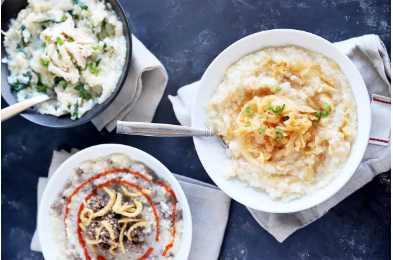
One way to support this seasonal transition is through food. Congee, also known as gruel, porridge, or jook, is made from crushed grains and hot water. Its preparation and consumption pre-date the age of ovens and leavening. It is both nutritious and easily digestible. Congee is used to wean babies, as well as nutrition for the aged and infirm. And, it is a great energetic base for people who do physical labor.
Congee is eaten hot and is very moist. A typical congee ratio of grain to water is 1 cup of grain to 9 cups of water. It is brought to a boil and then simmered for up to 3 hours. In the recipes below, we will offer variants.
How does congee support the Earth element in body, mind, and spirit through the seasonal transition?
The Earth element is associated with nourishment, digestion, stability, and being centered.
Congee is recommended because it is:
- Warm and easy to digest. Long-cooked grains are very gentle on the digestive system. The body spends less effort breaking food down and can use that energy to rebuild.
- Moistening without being cloying. Congee can support fluids and soothe dryness, common after winter heating, stress, or irregular eating. Congee is the perfect antidote to dampness and lethargy that come with weak digestion as a result of eating too much dairy, raw/ undercooked, and/or sweet foods.
- A steady, grounding food. Earth likes regularity. Congee is simple, predictable, and often eaten in the morning, which sets your daily rhythm.
On a mind level, Stomach and Spleen are linked with thoughtfulness and its excesses of worrying or overthinking. When the Stomach & Spleen are supported, people feel more mentally ‘settled’. They experience less rumination and have a greater capacity for focus and concentration.
On a spirit level, Stomach and Spleen relate to feeling embraced and nurtured. Warm, simple, shared meals can be a tangible way to cultivate these feelings, especially during seasonal transitions.
During this seasonal transition, aim for warm, cooked, lightly sweet, aromatic foods. Great choices are:
- Congee, oatmeal, and porridge
- Soups and stews
- Roasted or lightly sautéed root vegetables and squash
- Well-cooked greens (It may feel too soon for raw salad greens)
- Small amounts of warming spices, such as ginger, cinnamon, cardamom, and/or fennel
- Gentle aromatics to stir digestion, such as orange peel, scallion, spring onion, and/or black pepper
Congee Recipes

Savory Congee
1. Rinse 1 cup of organic white rice. (Substitutions: brown rice, barley, oatmeal, or millet)
2. Add 9 cups of water. (Substitution: bone broth, especially for people with weakened constitutions from age or illness)
3. Bring to a boil.
4. Simmer on a low heat for 3 hours.
5. During the last hour, add thickly sliced garlic, ginger, greens and/or cabbage of your choice, mushrooms, and/or seaweed.
6. During the last hour, add 2 chopped chicken thighs.
7. Garnish with fresh scallions or spring onions.
8. Serve while hot.

Sweet Congee
1. Rinse 1 cup of organic white rice, oats, brown rice, barley, or millet.
2. Add 9 cups of water or bone broth.
3. Bring to a boil.
4. Simmer on a low heat for 3 hours.
5. During the last hour, add 1 to 3 halved, pitted Medjool, Deglet, or center-sliced red dates (Jujubes from an Asian market).
5. During the last hour, add 1 to 2 fresh, sliced Asian pears.
6. Add desired seasoning such as cinnamon, ginger, or cardamom to taste.
7. Serve while hot or warm.

Conclusion
Congee is a whole food. As you can see from the recipes above, it is very adaptable to your palate. The variants you discover will only enhance the gastronomic, nutritional, and energetic support that Congee provides. While not exactly a ‘fast food’, it is easy to prepare and keep on hand for reheating any time of year.
Bon appétit!
This blog is not intended to replace medical advice. Please consult your clinician if you are in a weakened or depleted state.
Sources
https://onpointnaturalmedicine.com.au/congee-a-healing-bowl-of-wellness-the-tcm-perspective
https://felekacupuncture.com/blog/health-benefits-of-congee
https://madeformothers.com/blogs/the-buzz/tcm-benefits-of-including-congee-in-your-diet